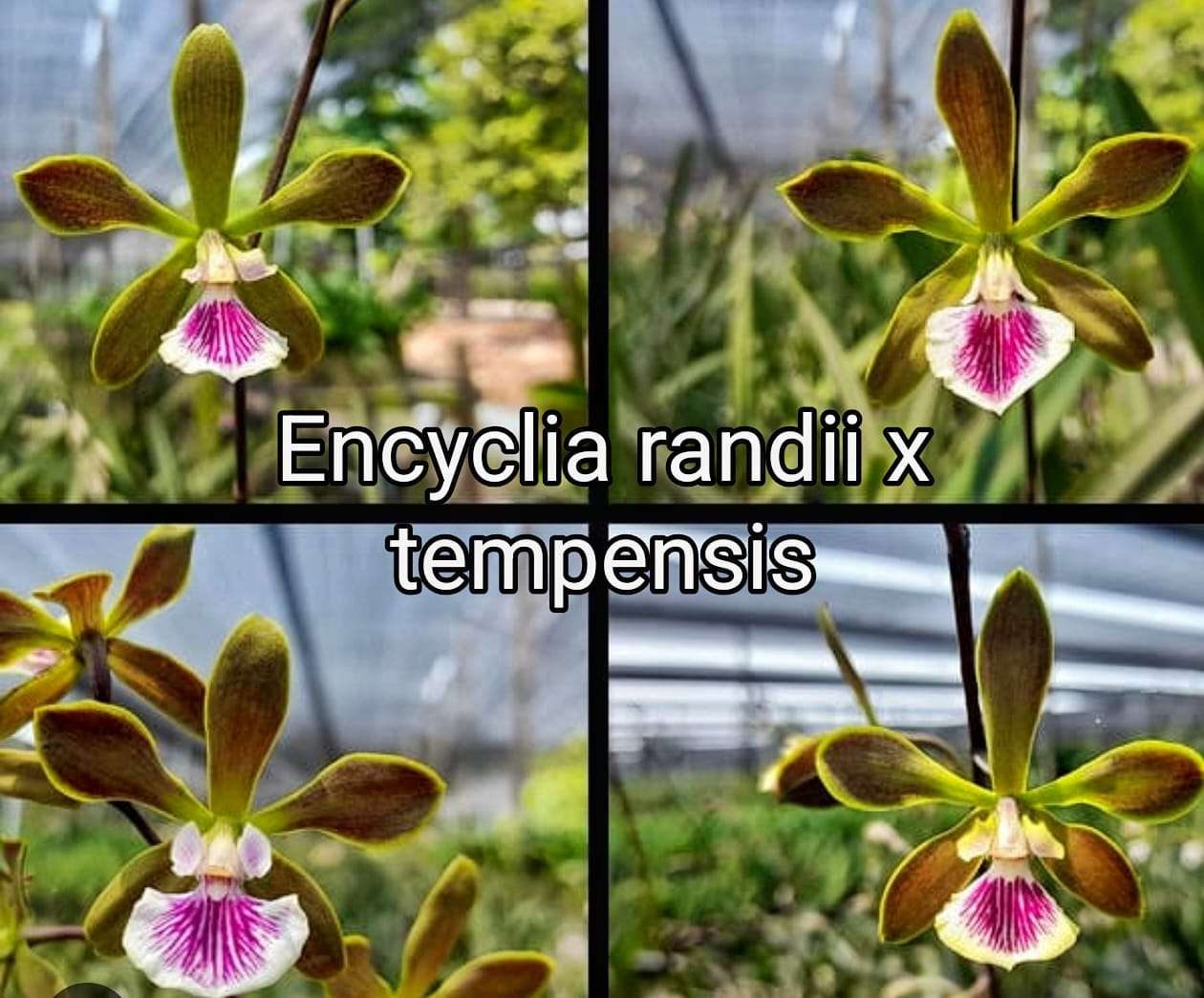
Description The hybrid Cattleya Encyclia Randii x Tempensis is a beautiful orchid with characteristics inherited from its parent species. Caring for it involves mimicking the natural environment of these orchids. Here’s a detailed care guide: 1. Light Provide bright, indirect light. Ideally, place the orchid in a spot where it receives filtered sunlight (e.g., an east-facing or shaded south-facing window). Avoid direct midday sun, as it can scorch the leaves. 2. Temperature These orchids prefer warm temperatures: Daytime: 70–85°F (21–29°C). Nighttime: 60–70°F (15–21°C). Ensure good air circulation to prevent heat buildup in hot climates. 3. Humidity Maintain humidity levels between 50-70%. Use a humidity tray or a room humidifier if the air is too dry. Provide adequate airflow to prevent fungal or bacterial growth. 4. Watering Water when the potting medium is nearly dry but not completely dry. Use distilled, rain, or filtered water, as orchids can be sensitive to mineral build-up. During the growing season (spring and summer), water more frequently. In winter, reduce watering. 5. Potting Medium Use a well-draining orchid mix containing materials like bark chips, charcoal, and perlite. Repot every 1-2 years or when the medium breaks down or the plant outgrows the pot. 6. Fertilizing Fertilize every 2-3 weeks during the active growing season (spring and summer). Use a balanced orchid fertilizer (e.g., 20-20-20) diluted to half strength. Reduce feeding during fall and winter when growth slows. 7. Flowering These hybrids bloom best when exposed to a slight drop in temperature between day and night. Ensure consistent care and adequate light to encourage flowering. 8. Pruning Remove spent flowers and flower spikes after blooming to conserve the plant’s energy. Trim off dead or damaged leaves with sterilized scissors. 9. Pests and Diseases Watch for common pests like mealybugs, spider mites, and scale. Treat infestations with neem oil or insecticidal soap. Prevent fungal and bacterial diseases by avoiding overwatering and ensuring proper airflow. 10. Environment If grown outdoors, ensure it’s in a shaded, well-ventilated area. Avoid sudden changes in temperature or conditions, as this can stress the plant.